Henry’s coerced cooperation with Shishani
All the Old KnivesHenry’s coerced cooperation with Shishani begins as a conversation and becomes a threat-backed intelligence arrangement. Ilyas Shishani presents Henry Pelham with a nominal choice: provide an untraceable phone number and answer future requests for information, or refuse and risk Celia Favreau’s death. Henry makes the deal, but the scene makes clear that consent under this ultimatum is a form of coercion, and that its consequences reach beyond the information he may provide.
The Conversation Before the Demand
Henry recalls that he spends an uncertain stretch of time explaining the situation around him: the contradictions of foreign policy in Moscow, anxiety at the embassy, and his own frustration. Shishani lets him speak without interruption. Only afterward does Henry realize that Shishani had anticipated this outpouring and that the speech, in Shishani’s view, has arrived on schedule. The apparent patience is therefore not evidence that the meeting has escaped Shishani’s control; it precedes a demand he has already prepared.
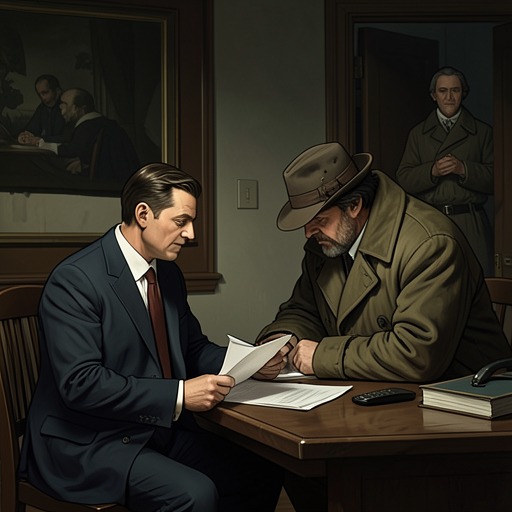
When Henry’s excuses run out, Shishani asks him to look at him. Henry finds this difficult, but Shishani says they are forming a new relationship and that this conversation will define it. The language gives the encounter the shape of a mutual agreement, while its circumstances point toward an unequal bargain. Henry asks whether he has a choice. Shishani answers that he can walk out and wait to discover what he did not want to hear. The option to leave is real in form, but it does not remove the pressure gathering around the conversation.
Terms and Threat
Shishani then lays out a practical method for contact. Henry is to give him a number belonging to one of his untraceable phones. Shishani will call from a number that cannot be traced back to him, sometimes ask for information, and expect Henry to provide it. Henry recognizes that the arrangement may not be as simple as Shishani makes it sound and tests its terms by asking what would happen if he refused.
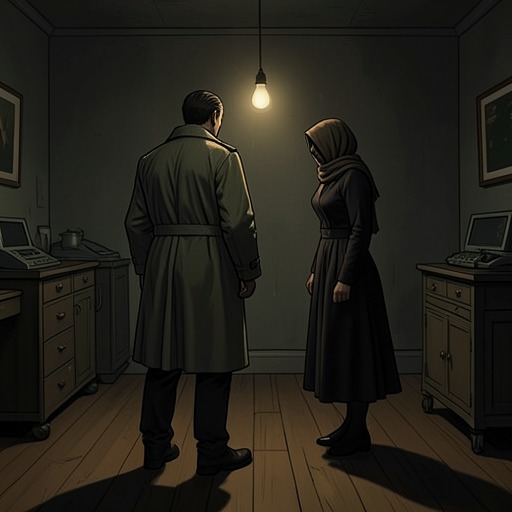
Shishani responds by raising an index finger and identifying the consequence: if Henry refuses to answer his questions, Celia Favreau will die. He names her as the woman Henry shares his bed with and delivers the threat with conspicuous excitement, sitting upright almost boyishly. The contrast between the mundane mechanics of a phone number and the threatened killing exposes the arrangement’s actual basis. The phone is not simply a channel for intelligence; it is the instrument of an ultimatum against Henry’s intimate life.
The scene’s account of choice is consequently double-edged. Shishani insists that Henry always has a choice and says he may walk away, yet he has just attached a lethal cost to refusal. Henry’s question about whether he can decline is not answered with negotiation over the requested information. Instead, Shishani makes the threat specific, personal, and immediate. Henry’s subsequent description of the deal as made confirms that he accepts the arrangement under that pressure; the passage does not detail the later calls or the particular information he supplies.
The Deal’s Personal Cost
The threat lands amid Henry’s awareness of the danger surrounding them. He thinks of crowded Viennese streets and wonders how many shadows followed him, whether Shishani himself was among them or whether they were men reporting to him. Henry concludes that Shishani was too occupied organizing the murder of 120 people to watch him personally, while also calling Henry’s lover. This context enlarges the threat beyond a private bluff: Henry is confronting a man associated with mass killing, even as the immediate leverage is Celia’s life.
Henry describes the deal as justified, but justification does not make it painless. As he listens to the slow, detailed account of the night, he sees Shishani growing weaker and says that this still breaks his heart. He wants to get up, leave, and put the whole matter behind him, but recognizes that he cannot simply make the memory disappear. He expects to carry the night for the rest of his life, with it returning while he puts Ginny Favreau to bed or watches Evan Favreau’s ballet recitals. His children become the reason he must keep going and make sure the memory does not suffocate him, not proof that the burden has been resolved.
Memory and Narrative Significance
The scene reaches the reader through Henry’s later recollection, which is itself heard by Celia Favreau. That layered telling gives the episode two distinct forms of consequence: the original coercion, and Henry’s present effort to recount what happened. The remembered conversation is organized around a shift from open explanation to an explicit threat; its slow pace allows the practical terms, Henry’s hesitation, and the danger to Celia to accumulate before the ultimatum becomes unmistakable.
Henry says the deal is not what haunts him most. He distinguishes the murders from the end of his relationship with Celia, identifying their separation as the consequence that continues to torment him. The distinction reveals the selfishness he sees in his own response: the threat concerns a broader world of violence, yet his lasting anguish is bound to the loss of their relationship. The episode therefore defines cooperation not as a clean decision between loyalty and betrayal, but as a choice made under lethal pressure whose emotional aftermath cannot be contained by calling it justified.